
Save to...


Herend
 (66)Large Giraffe Multicolor
Description
For centuries, giraffes were unknown outside of Africa and their appearance incited such curiosity that they were sometimes used as diplomatic gifts. The curiosity is certainly an understandable reaction considering the unusual appearance of the world’s tallest land animal. The most obvious is their long necks which provide the advantage of reaching vegetation that other herbivores can’t. That said, their favorite delicacy is the thorny acacia tree which deters most others who do not have the giraffe’s long, muscular tongue to avoid the thorns. Far from avoiding each other, fellow plant-lovers such as zebras, antelope and wildebeest prefer to graze near giraffes since the giraffe’s sightlines are so far (due to their height) that they act as an early warning system for any predators long before their shorter neighbors can ever see them.
Beyond their height, giraffes are also known for their distinctive animal print. Similar to thumb prints, no two giraffes have the exact same pattern. Scientists theorize the spots serve as camouflage allowing the giraffe to look like a dead tree from afar.
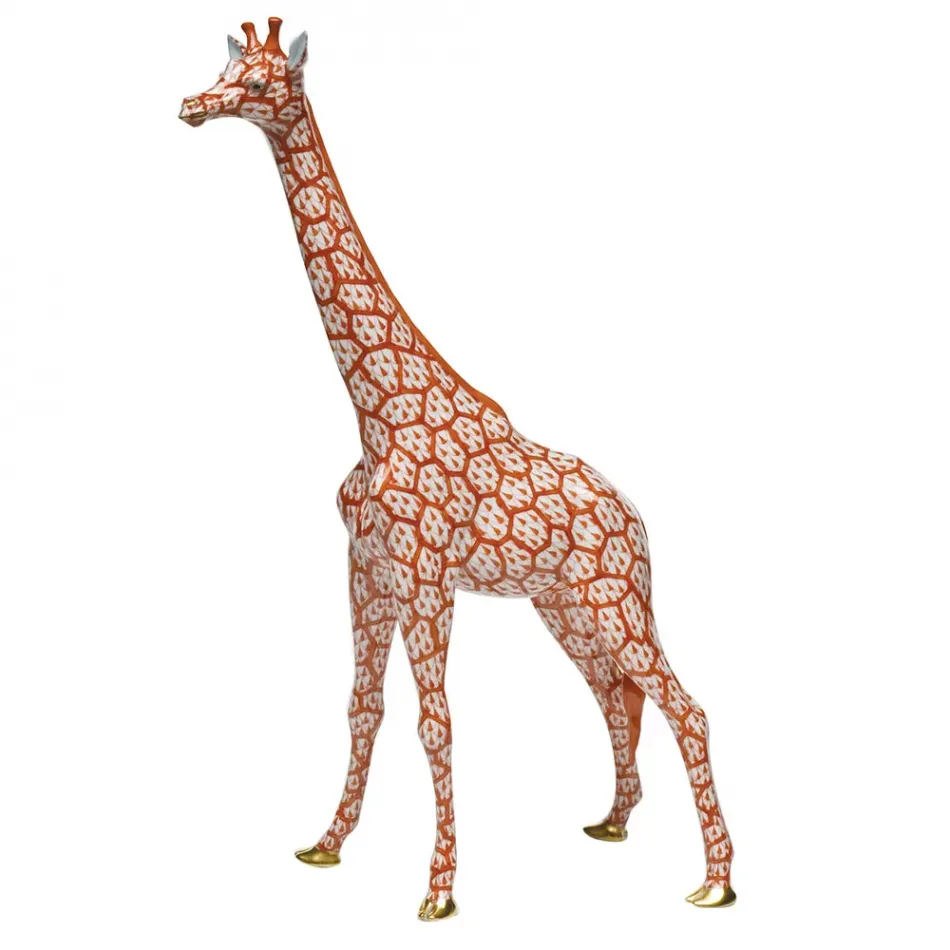
Herend’s newest figurine will no doubt incite similar curiosity to those first “diplomatic” giraffes since their newest introduction is an ambassador of creativity. Showcasing an unusual spin on traditional fishnet, the reserve collection giraffe features a modified fishnet made to look like animal print. This new fishnet technique is a complex process. It takes one artist over 20 hours to paint since it requires much concentration as the artist has to create “unnatural” breaks to mimic the spots - contrary to the usual, fluid style involved with painting fishnet. Available in a rust fishnet, the giraffe is 15.5” tall and is offered in a luxury case in a limited edition of 250.
Endearing animals meek and bold, large and small, demure and majestic eagerly await the chance to melt your heart and warm your home. Each is brought to life by the skilled hands of artisans crafting and painting these charming porcelain creatures. The famous fishnet décor adorning many of the animals took form in 1858 when a Herend painter became inspired by a fishscale design he saw on a Chinese porcelain plate and painted a similar pattern onto a rooster figurine to imitate feathers. The rest is history, with the fishnet design now a Herend signature prized worldwide.
Now the biggest porcelain manufactory in Europe, Herend was founded in 1826 to produce earthenware in the small Hungarian village for which it was named. At the time, Hungary was flooded with low-cost pottery, but in 1839, Mor Fischer became the Manufactory’s new owner and he decided to focus on producing dinnerware replacement pieces for Europe’s royal families to complement their valuable porcelain patterns from Germany and the Far East.
As his client base grew, Fischer commissioned his artists to begin designing dinnerware patterns of their own. Queen Victoria’s 1851 purchase of a large set for Windsor Castle was a milestone, setting the stage for aristocrats throughout Europe to clamor for Herend in their estates.
In the 1850s, Herend added meticulously-crafted figurines to its creations. Herend’s trademark fishnet pattern, which is widely recognized and prized as Herend’s signature design, started in 1858 when an artist who was intrigued with a Chinese plate’s fish scale design painted it onto a rooster figurine to imitate feathers.